

Can ALLDAY PROJECT Do More Than Ragebait?
ALLDAY PROJECT is simultaneously one of K-pop’s most popular and hated groups. On their new EP CRASH, the group seems boxed in by their infamy.
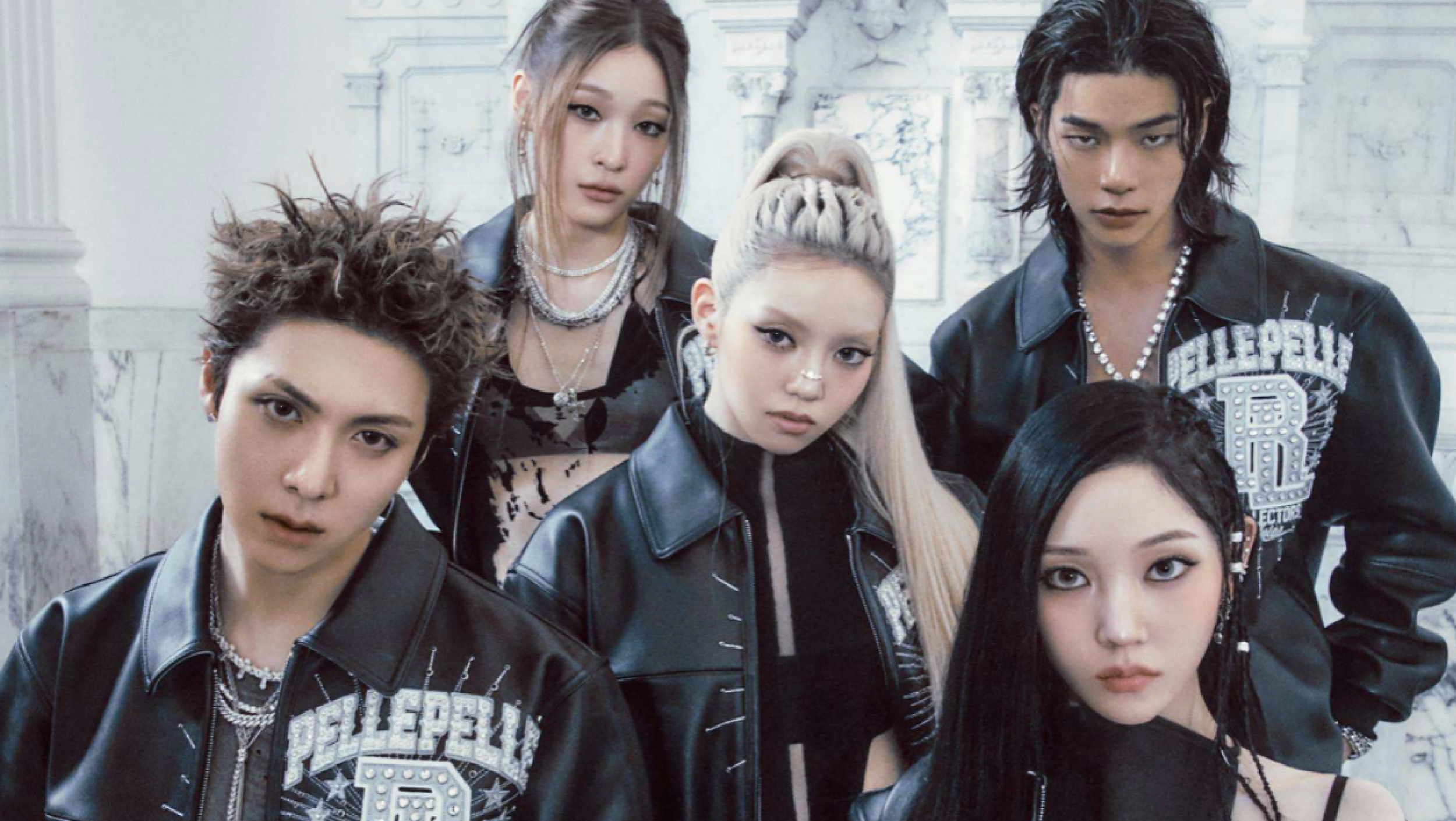
These days, K-pop idols are required to become the most sanitized version of themselves, often undergoing extreme plastic surgery, purging their digital footprints, and engaging in carefully staged fan service to be seen as the ideal type to new fans. But there’s something almost uncanny about the way TARZZAN became famous for doing what idols are never supposed to do: by courting controversy through cultural appropriation.
Born Lee Chae-won, TARZZAN was a model before THEBLACKLABEL cast him in their co-ed group, ALLDAY PROJECT, where he is one of four rappers. “This is how I live by the name TARZZAN/ I ain't even famous/ But when they see me, they say less,” he raps in a line meant to mythologize him on their debut single "FAMOUS". But in the West, at least, TARZZAN drew widespread criticism for wearing box braids, a style traditionally associated with Black men. The discourse only seemed to fuel TARZZAN's popularity, though, and by the time he switched to a soft, curly wave in November 2025, he had become one of the industry's most recognizable idols.
ALlDAY PROJECT's largest fanbase is based in Korea, where accusations of cultural appropriation are less important to fans than other scandals that take down idols, like dating or assault. So as debates raged online, ALLDAY PROJECT won major awards at year-end festivals and launched smash-hit singles like “WICKED” and “FAMOUS”, a tongue-in-cheek declaration that they are the shit, even if no one knows their name yet. Their first EP, released in December, sold over 250,000 copies in its first week.
TARZZAN, though, wasn't the only member to gain divided public opinion, especially among Western K-pop fans. Nearly every ADP member seemed to fit a K-pop or Korean-culture archetype: Annie, a rapper who begged her family to let her become an idol, comes from generational wealth. In Korea, her family is known as a chaebol, a large, family-controlled industrial conglomerate. Her great-grandfather is Lee Byung-chul, the founder of Samsung Group, Korea’s largest conglomerate and a leading multinational corporation. Her grandmother, Lee Myung-hee, chairs the Shinsegae Group, one of South Korea's leading retail conglomerates. Her mother is president and Chief Executive of Shinsegae, Co. Ltd. YOUNGSEO and WOOCHAN both come from failed debuts: YOUNGSEO pulled out of ILLIT right before debut. WOOCHAN was on track to debut with Big Hit’s popular trainee group TRAINEE A until they were disbanded. BAILEY, the group’s American member, is a choreographer with a wild resume including aespa’s “Savage” and SHINee’s “Don’t Call Me”.
For at least six months, the group’s controversies and polarizing members seemed to fuel their popularity. In the West, ADP looked like a group engineered to ragebait K-pop fans, even as they spun out more hits and gained more popularity than ever in Korea. By the time Annie went on hiatus to finish her degree at NYU, ADP was on track to be one of their generation’s most notorious and popular groups.
After a ten-month pause between new music, ALLDAY PROJECT’s new EP CRASH finally arrived last week. While many K-pop groups remain active during a member's hiatus, ADP released nothing as Annie finished her senior year at NYU. THEBLACKLABEL's decision to sideline activities may have hurt the group: CRASH’s first-week sales clocked in at 60,000, a large drop from their last release.
CRASH is a test for ADP and begins with somewhat of an uphill battle: Can they be known for more than simply being (in)famous?
CRASH tries to answer this by front-loading the EP with swagger. WOOCHAN is a talented rapper who can zip through a verse with panache and style, even when he is frustratingly underutilized. While Annie and TARZZAN often get criticized for their rapping, I still find their performances interesting. I like Annie's surprisingly low voice and flow, while TARZZAN's style is sleepy, as if he can't be bothered to impress anyone.
The album's biggest issue, then, isn’t its performance. It is a lack of musical identity. BAILEY and TARZZAN co-wrote multiple tracks on CRASH, but their lyrics, generic at best and stupid at worst, rarely offer a real point of view. The members rap about endless shots, staying up all night, and being the baddest. Still, there’s no specificity about how this actually defines ADP.
Instead, CRASH sounds like the rejected B-sides of THEBLACKLABEL CEO Teddy Park's biggest group, BLACKPINK. Even when the group does address the hate they've experienced on "TALK", the lyrics tell us nothing about how it affects them. Take these dumb lines from the chorus, for example: “All they do is talk, talk, talk, talk/ All I hear is blah, blah, blah, blah (Shut up)”. They fare no better on B-side "DO IT LIKE THIS" with derivative lyrics you've heard a million times before:
“Dance watch me dance
Watch me do my dance
We ain’t go plans
Just running up the bands”
ADP's authenticity seems to lie in their excess: They're the first to take too many shots, the first to talk the loudest shit, or to throw the first punch. It's this messiness, this ability to draw out the contradictions between how idols should act and how very famous, wealthy young adults do act, that makes them seem genuine. If that makes them a villain to some K-pop fans, others find their style relatable and aspirational.
It's rare for a K-pop group to embrace a messier image, but it also seems fitting for a group that positioned itself as a ragebaiting final boss. Maybe because of this, CRASH feels less like a K-pop record and more like a group that is beginning to pivot straight into hip-hop.
The biggest challenge for ADP, then, is to channel all the conversation around them into good music that matches their provocative image. Without that piece, CRASH has the substance of a wild all-nighter: a raging good time until the welcome wears out and you're left exhausted, ready to call it a night and get the hell out.
