

BLACKSWAN’s Gabi Is Learning How to be Brave
In her first major interview since joining the global girl group BLACKSWAN, Gabi recounts her unexpected journey to becoming an idol — and why it’s so hard to be herself.
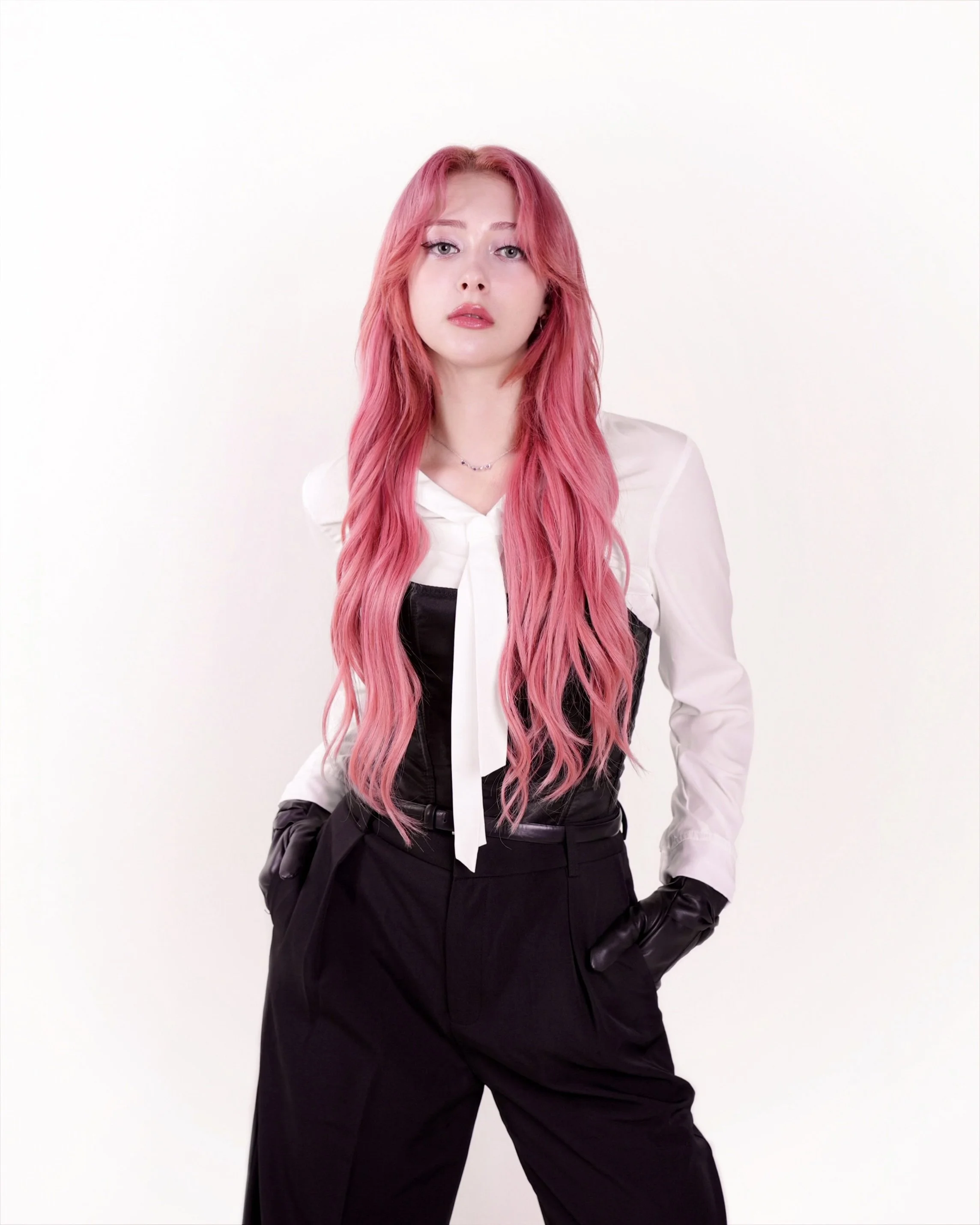
DR Music
When BLACKSWAN’s Gabi looks back on it now, the idea of becoming an idol seemed impossible.
As a teenager growing up in Florianópolis, Brazil, Gabi had given up a promising volleyball career to pursue acting and modeling. Even when she would make it to a second audition, she was never selected for the role. When she auditioned for BLACKSWAN’s company, Gabi told me recently in an interview, she had no reason to think she’d do any better. “I already had the mindset of. ‘If I can’t pass auditions in Brazil, why would I pass for something on the other side of the world?’”
However, Gabi is nothing short of determined and, as I learned in our conversation, surprisingly tough. She’s had to be in order to make it this far—not just as an idol, but also as someone who moved to Korea as a teenager with no family or friends to guide her.
“I honestly didn’t think it was going to happen,” she continued. “That’s one reason I almost didn’t do the audition, because I kept saying, ‘I’m just going to send the tape and no one is going to reply. I’m not going to pass.’”
Her father, who had always been a source of support and inspiration for Gabi, told her, “You already have the no [from other companies]. You need to keep trying until you can get a yes.’ And then, it happened.”
Since her debut in 2022, BLACKSWAN’s Gabi has become a powerful and important figure in K-pop. She is currently the only actively-promoting idol representing Brazil, a country with a deeply passionate K-pop fanbase. On social media, Gabi is also a popular influencer, boasting more half a million followers on TikTok, where she documents visits to Seoul’s Fashion Week and nights out at exclusive, invite-only events.
Long before KATSEYE would debut as a global girl group, BLACKSWAN had become a hugely formidable force in the industry. Their leader, Fatou, an African idol, is legendary within Black K-pop fandom. But the group is truly multicultural: Syria, an Indian singer, joined the group alongside Gabi in 2022, and a few months later, NVee, a biracial American singer, joined.
Since then, BLACKSWAN has released some of their most popular music, including one of my favorite EPs, Roll Up. Onstage, the girls have a swagger, as I saw firsthand when I met them at Kapture Con in Washington, D.C., last year, where the artist I manage performed. Their fanbase is small but mighty and intensely loyal to the girls, all of whom represent different cultures and backgrounds.
“Of course, we can’t leave out the fact that we’re from all over the world. That’s part of it,” Gabi said. “But also, each of us has a different personality, and even though we like different genres and come from different cultures, we can still put it all together and make music. We can still work together.”
The fact that these girls from all over the world can come together and find an intensely loyal fanbase, known as LUMINA, is something that Gabi doesn’t take for granted. Perhaps more surprising, she admitted, is that she even made it in the first place.
When I told her that it felt serendipitous to not succeed at home only to find a place in Korea, she smiled.
“Sometimes,” she said with a hint of disbelief, “I think it was just destiny.”
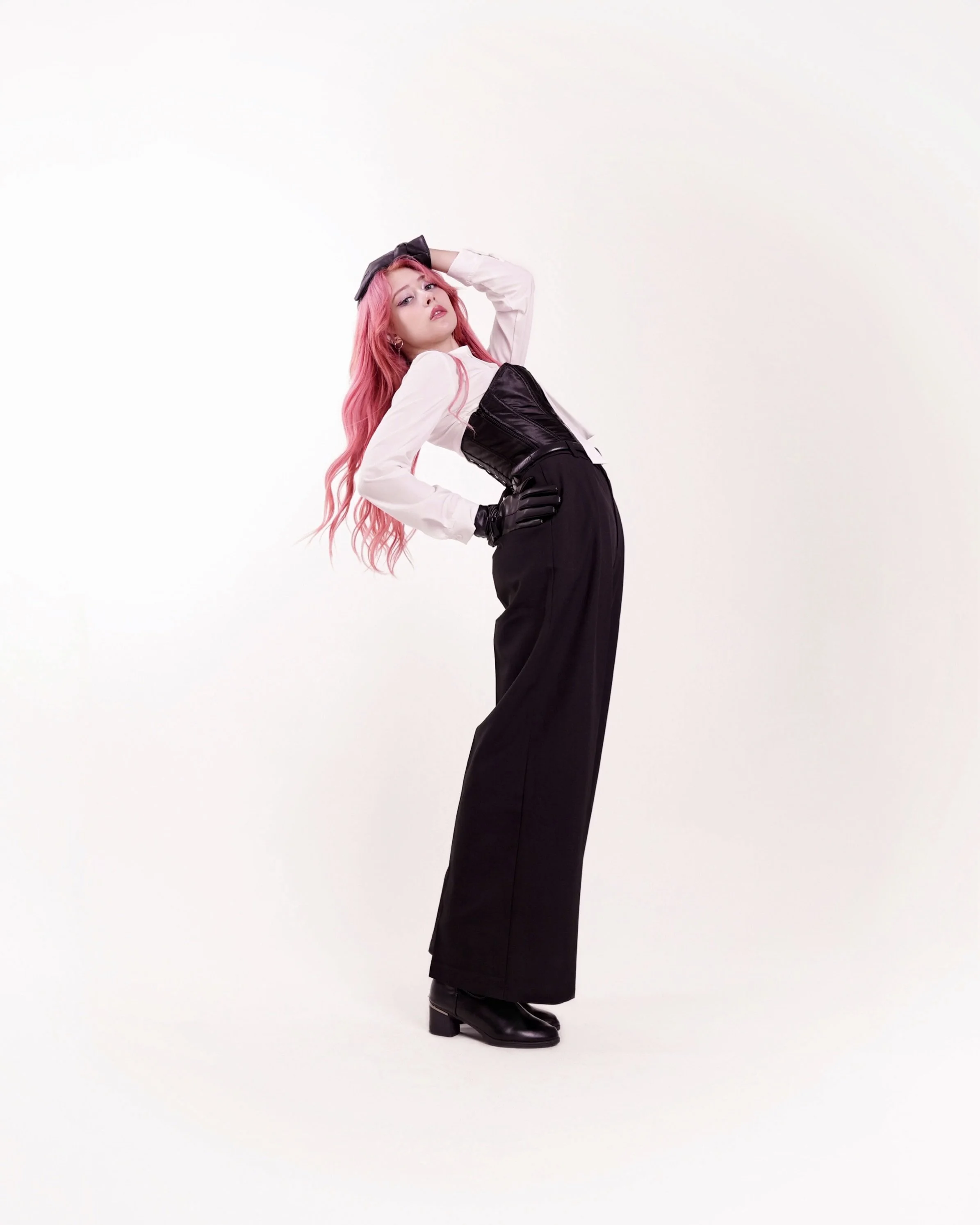
For a long time, Gabi always considered that she would find her artistry in sports.
After nearly five years of volleyball, Gabi made her district’s team at 15 and was later promoted to the city’s team. But she realized she couldn’t see herself playing volleyball beyond high school. Her family, she said with a laugh, was shocked when she quit.
“My dad was like, ‘Oh my God, everything is going well. You’re already on the team,” she recalled. “And I said, “Yeah, but I think this is not for me.”
The reason, she told me, was that she realized her passion was actually in musical theater. “At one point, I saw volleyball as my future career and musical theater as something for weekends or free time,” she explained. “But when volleyball started becoming more serious, I realized I actually wanted that to stay a hobby – and I realized I wanted something involved in music.”
Her decision to pursue art was unusual. While her great-grandfather used to professionally tune pianos, no one else in Gabi’s family shared an interest in the arts. “My father says I’m the first artist in my family,” she said. “After me, my cousin and my sister also wanted to pursue art, even in different forms like drawing or other creative things. But I was the first.”
Part of the reason could be that Gabi’s household was not particularly clued into pop culture. Before K-pop, Gabi was mostly interested in highbrow art: classical music, opera, and musical theater all shaped her artistry more than modern-day musicians. Pop stars never caught her attention. “If you had asked me when I was 13 or 14 about artists like Britney Spears or Beyoncé, I probably wouldn’t have known much beyond maybe a few songs, because at home we mostly listened to classical or musical songs,” she remembered.
When she was in middle school, though, a friend kept insisting that she try listening to K-pop. But Gabi wasn’t sure if she would like it. Eventually, sick of waiting for Gabi to come around to K-pop, her friend put the headphones on her and played BTS’s “War of Hormone.” It was good, different even, Gabi remembered thinking. For someone who liked classical music and musical theater, there was a drama to the music that sounded compelling.
When she got home that day, Gabi searched “K-pop” on YouTube, where she found more than just BTS but groups like GOT7, too. She’d grow to love both.
Gabi caught wind of BLACKSWAN during the pandemic when she learned that a Brazilian member was part of the original lineup. That was unexpected, she thought, because how could a Brazilian be in K-pop? When DR Music announced new global auditions to be held online, she wondered whether there could be a place for her within the company as well.
Even as Gabi passed through the first two evaluations, she still didn’t believe that she had a shot at being selected. The possibility seemed improbable. Laughable even. If she couldn’t make it at home, why would she ever make it in Korea? Plus, she had no experience or training, unlike many of the other girls. At home, she was a member of a dance crew that often performed covers of popular K-pop songs, but she was still unsure if she could succeed.
Despite these doubts, she persevered.
Gabi advanced from a group of 24 to the final four. The final announcement came while her parents were away on a trip. “I watched the live announcement on a video call with them, wondering, ‘Did I make it or not?’ When I passed, I cried so much,” she said, still visibly moved by the moment. “I think I still have the video—my face is so swollen from crying. Then I came to Korea, and everything happened.”
Moving to Korea wasn’t easy for Gabi, and the next part of her story is hazy. Many moments, including her debut, feel almost blocked out.
“There were so many things happening at once in a short period of time — language, diet, culture, weather.” The weather was so brutally cold, Gabi remembered, that she often got sick. “I wasn’t used to the cold, so I still get sick in the winter sometimes.”
Training was hard on Gabi, both physically and mentally, as she learned how to cultivate an idol’s image. Dieting turned out to be one of the toughest requirements. “I love to eat, so having to constantly check what I eat is hard. It’s a different kind of discipline,” she said. “We already have the discipline of schedules and training, and then we also have to discipline what we eat because we work with our image too.”
Moving to Korea—and living away from her family for the first time—forced Gabi to grow up fast. Though very young, she had to quickly learn to care for herself. She felt isolated with a limited grasp on Korean and English. “I had to learn how to become an adult by myself almost overnight. Suddenly, I was living alone in another country, with a language I didn’t know,” she said.
She was grateful to Sriya, who entered the training program at the same time as her. They were both foreigners, attempting to learn a new culture and language, as well as how to be idols.
“It was a really difficult time for me, so a lot of memories got lost. I don’t remember many things that happened then,” she said. Some online comments could be hateful and cruel. No one knew who Gabi was, and she was walking into a group that already had a firm brand established. “But I’m pretty sure it got better because I joined with Sriya. We were always there for each other, and joining with another girl made it feel less pressuring than if I had entered alone.”
She tried to be there for NVee, too, when she joined the group a few months later. Very few people could understand what she was in for except for Sriya and Gabi. “I think especially because Sriya and I had arrived just a few months before her, we could relate to how she might be feeling,” she said about NVee’s arrival. “Sriya and I came together, so we could count on each other, but she came alone. So we wanted to help her.”
When I asked Gabi about her debut day, she grew quiet. "I don’t remember that day very clearly," she said. Looking back, she was likely too self-conscious about comparisons and appearances to enjoy it fully. What stayed with her most were the things she couldn’t control.
“I remember I was really worried about my appearance because I was really bloated and I was just so nervous.” That version of Gabi, she said, couldn’t be as compassionate towards herself. She made mistakes on stage and “I was worried about a lot of things, especially my appearance.” When I asked how she felt about her debut, she was blunt. “I can’t say I came off my debut stage feeling amazing” because, in her view, she wasn’t the best.
There is a certain trauma you go through when you are this displaced from home, this isolated from friends and family. No matter how badly you want to achieve your dream, sometimes these sacrifices can be too much, and many teenagers as young as Gabi, quit. When I told her that she must be a tough person to survive all of these challenges, she seemed surprised.
“That’s interesting because I always saw myself as fragile, not as a strong person,” she observed. “But with everything I’ve been through, and from what my close friends who know everything have told me, they’ve said, ‘Girl, you’re so much stronger than you realize.’”
Gabi is quick to point out that she was sensitive. At times in our conversation, it seemed like she hadn’t quite accepted that her fragility didn’t mean she wasn’t strong. “That’s one reason I used to think I was really weak,” she said. "Because I cried a lot. I still do cry a lot, but it’s just my way of relieving stress. It’s better to cry when something happens than to keep it all inside and let it get worse.”
She took a breath, then continued.“Yes, you can cry. It doesn’t mean you’re weak. You just need to know when to cry and in front of whom — who you can trust.”
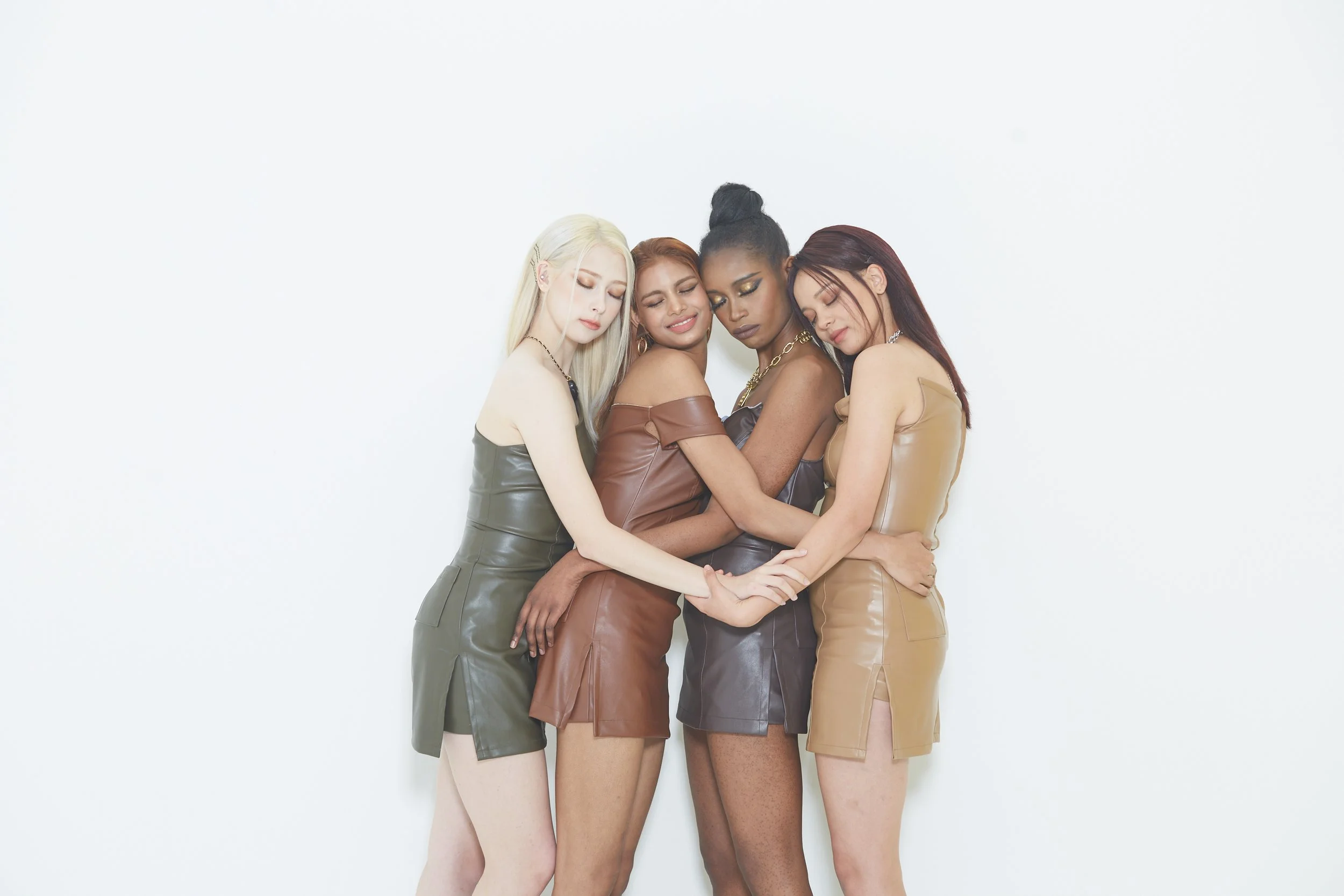
BLACKSWAN members: Gabi, Sriya, Fatou, and NVee
Idols are known for their curated social media feeds, and Gabi admits hers is just as controlled.
But lately, she has been considering how to be more open and genuine with LUMINA. No one really knows what she went through to get here, and she sometimes wonders if she should share more. Say more. Be brave enough to show that not everything is perfect. “People sometimes see us only posting the good things, so they think we don’t struggle,” she admitted. “But sometimes we’re having a really hard time, and we don’t want to show it because we want to inspire people.”
Gabi tends to avoid social media if she’s in a bad headspace. It doesn’t help her feel any better about herself, and the comments can get to her. “But lately I’ve been doing much better, so I try to post at least once a week because I know Lumina misses us, and I want to be there for them.”
On social media, and in videos, Gabi’s got an aura. She radiates prismatic beauty. She looks confident, gorgeous – the kind of girl who could win you over with a secret or a smile. When I asked what she thinks makes her unique, she said it’s her personality, something that everyone, especially her friends, tells her is special. “But I also feel like I still haven’t had the chance to show it properly to the public. People who follow me on social media probably know a little more because I’ve been posting more, but there’s still so much I haven’t shown.”
She’s proud, too, to represent Brazil and to be a member of an important global girl group like BLACKSWAN. But perhaps by being in a group like BLACKSWAN, she can represent how far a Brazilian entertainer can go.
“I’m happy to see that Brazilian culture is becoming much more visible and is being exported these days. Even if my part in that is small, I’m still a little part of it,” she said. Gabi’s noticed that lately, more people want to visit Brazil because of its vibrant culture. For some people here. She’s proud too that she’s “helped break some stereotypes they had about Brazil. Nowadays, more people understand us better as a nation; what kind of country we are and what we have there.”
There is a tension here between the girl Gabi left behind when she moved from Brazil and the woman she’s becoming as a member of BLACKSWAN. If she seems superficially light and bubbly, then you’re not looking closely enough. She is, in many ways, a pure diamond in the rough. She’s got depth.
When she thought back to how hard her first year was, how often she wondered if she could make it, Gabi was candid: she didn’t know how she made it through. But she also realized something important. “I learned that the main thing in life is that you need to keep going. It’s hard. There are going to be bad times, but you can get through them,” she said.
She smiled for a moment as she considered how far she’s come. “There are always people beside you who will be there for you, and there is always a way out.”
