

Inside YEONJUN’s Push for Global Stardom
To promote NO LABELS PART 02, the singer is undertaking a high-wire act to break Stateside. Can his determination result in success?
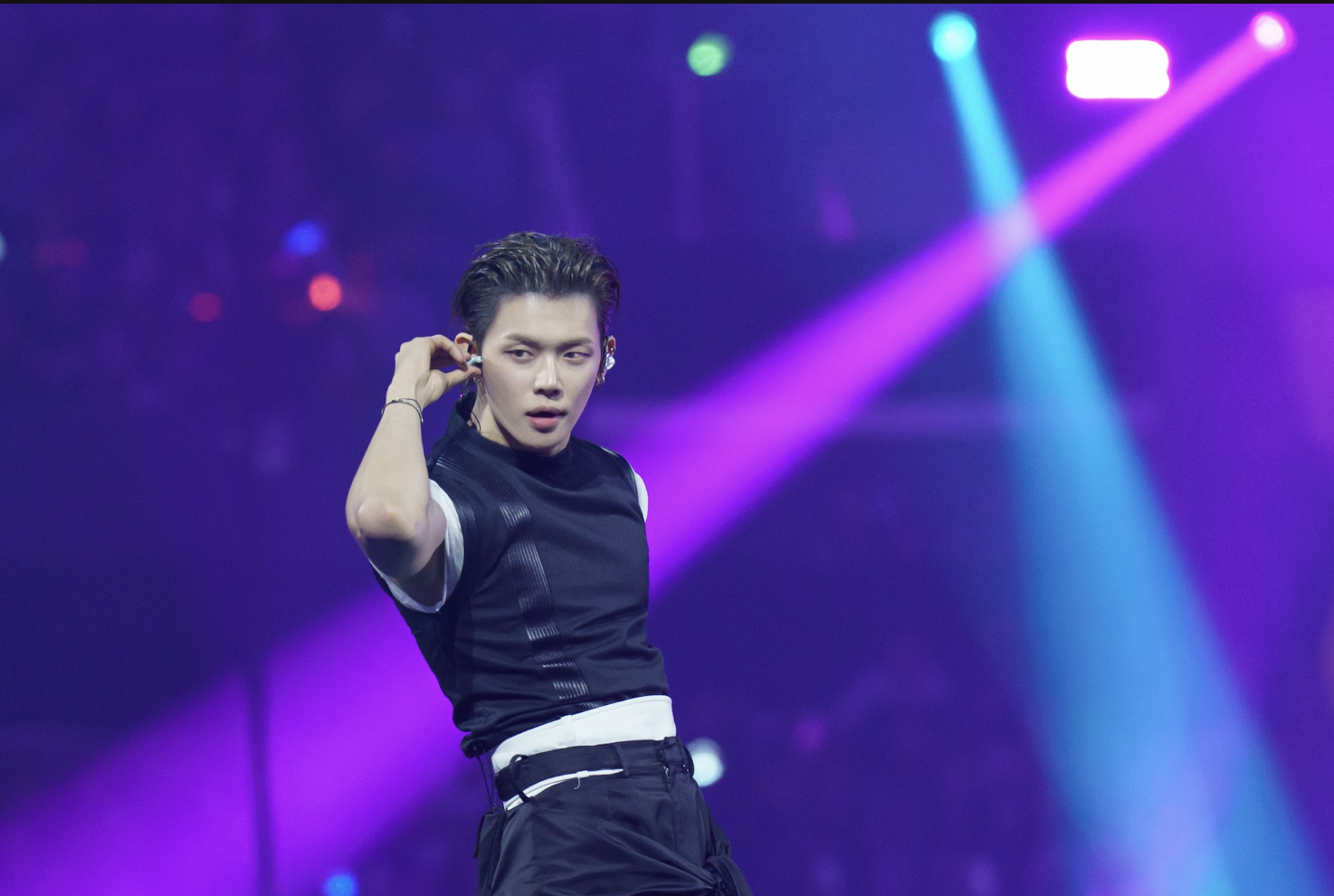
CJ ENM
Twenty years ago, in the winter of 2006, RAIN played his first headlining North American show at New York’s Theater at Madison Square Garden. In the years prior, RAIN had become a superstar in Asia. His third album, IT’S RAINING, was career-defining, cementing him as a sex symbol to millions of fans, and he eventually expanded his star power into acting, headlining the smash-hit series Full House that same year.
RAIN’s concert, cleverly titled Rainy Day in New York, was part of a masterplan devised by Jinyoung Park, the CEO of JYP Entertainment and the architect of RAIN’s career. "This is for the American music industry," Park said in an interview, "basically introducing RAIN, giving a taste, and everybody is coming."
Throughout the week, RAIN went to TRL, where he stumbled over his English and nervously sat through a press conference, where most of the press were Korean news outlets. In a revealing interview with the New York Times, he communicated through an interpreter about his desire to succeed in America: "I would really like to see an Asian make it there. I would like that Asian to be me.”
The concert sold well, and for a while, a breakthrough – at least in Park’s eyes – seemed imminent. But plans for an English-language album were scrapped, and except for a few Stateside performances over the years, RAIN abandoned his dream to be a star in the West.
History doesn’t always repeat itself, but it often rhymes. This month, YEONJUN, a 26-year-old member of TOMORROW X TOGETHER, embarked on a two-week-long press tour to promote his second EP NO LABELS PART 02.
He began in New York, performing at Good Morning America’s free summer concert series in Central Park. From there, he moved to Los Angeles, where he held a free concert hosted by Billboard magazine and appeared at the Dodgers Korean Heritage Night, where he again performed a free show and threw the first pitch. The culmination was a packed weekend at KCON, where he would appear at the Artist Stage for another intimate performance before appearing twice on M Countdown at the Crypto.com Arena, the second appearance with TOMORROW X TOGETHER.
Before I traveled to LA for KCON, I watched YEONJUN at the Good Morning America concert. On stage, he seemed confident, sexy, a true example of what K-pop training can do for a performer. But offstage, as the GMA hosts interviewed him, I felt a pang. He looked nervous as he said with a stiff smile, “I wanted to show another side of myself” – a description so rote that I hear it with nearly every press interview I do for this blog. I noticed the same glazed-over look in the hosts’ eyes that I’ve seen countless times before when they speak to an international guest. I felt a protective, paternal instinct kick in that morning, and again, when I saw him in person in LA.
The experience, I realized after I got home, reminded me of RAIN’s press tour.
In 2023, the last time I saw YEONJUN live, TOMORROW X TOGETHER headlined Lollapalooza. This was YEONJUN's first big international push. The group had recorded a collaboration with the Jonas Brothers – “Do It Like That” – and would soon perform at the VMAs.
TXT’s performance at Lollapalooza felt earned. The year before, they had nearly stolen headlines at the festival when they performed with a live band in a grungy stage show that reflected some of their best instincts as a band, particularly with tracks like “0X1=LOVESONG (I Know I Love You)” and "Anti-Romantic".
Bang PD, TXT's creator and founder of the label Big Hit, was confident that “Do It Like That” would sweep the charts. The members speculated how they would react if they charted on Billboard. BTS, their seniors at Big Hit, were already at the peak of their success. But the single bombed, partly because it was terribly out of step with what Americans were listening to. A follow-up collaboration, “Back for More” with Anitta, also failed to chart. Last year, when the group toured North America, they moved tickets slowly in arenas, while peers like STRAY KIDS moved to stadiums.
In the past year, CORTIS debuted under Big Hit and became the biggest boy group in K-pop. TXT, long thought of as a group unafraid to be weird or appear soft, felt cemented into Big Hit's middle-child syndrome. Whatever happened that kept them from breaking into the mainstream in the U.S., it felt like there was little recourse for the miscalculations made in their American debut.
If anyone seemed to still have a shot at grabbing some Stateside recognition, though, it would be YEONJUN. Next to TAEHYUN, he is the most fluent member in English. He is also undeniably a star. A few years ago, when TXT seemed all but assured to become internationally known, YEONJUN reminded me of SHINee’s TAEMIN, a legendary soloist who has created a brilliant discography entirely separate from his group. Both are grade A performers; both are highly ambitious in the goals they set for themselves.
YEONJUN’s first EP, NO LABELS PART 01, had incredible visuals but was, musically, a mixed bag. I appreciated the effort that YEONJUN put into finding a new genre and trying something genuinely unexpected. The last half of the album was the most interesting as the beats got weirder and less structured, particularly on “Coma” and on the funky “Do It”. There was an element of queerness, or at the very least, an exploration of sexuality in both the title and the concept images, which featured YEONJUN shirtless, frozen in mid-movement. I liked these parts of the album, and I wanted something that reflected this version of NO LABELS. What does it mean to YEONJUN to not define yourself by how others perceive you?
PART 02 felt hampered by a decision to go safer. Big Hit shaved down the edgier parts of the first EP, and YEONJUN introduced a more palatable lead single with “Ice Cream”. It’s a song so familiar that you’ve probably heard it a million times before. “Vanilla”, the album’s opener, matched its title.
The song I had the biggest issue with was that I never felt like we heard directly from YEONJUN. Take, for example, “Fxxking Star”, a bawdy track where YEONJUN talks his shit about being the best. “What can I say? It’s nice to be me,” he raps. The track is cocky and arrogant, two qualities I probably would never use to define YEONJUN as a person. And that misalignment is probably because YEONJUN didn’t write this track. This is what the writers and producers want us to think of YEONJUN. This is the image they've constructed.
The arrogant, confrontational MC on “FXXKING STAR” was most at odds with the genuinely bewildered person I saw when he won his first award for “Ice Cream” on the variety show circuit. It was refreshing to see an artist be genuinely moved by the first-place wins (YEONJUN would go on to win several). In a livestream right after his first win, YEONJUN clutched his trophy and beamed as he called to his fandom, “MOOOOAAAA”. He admitted, with still teary eyes, that he almost cried when he heard his name at the winner’s ceremony.
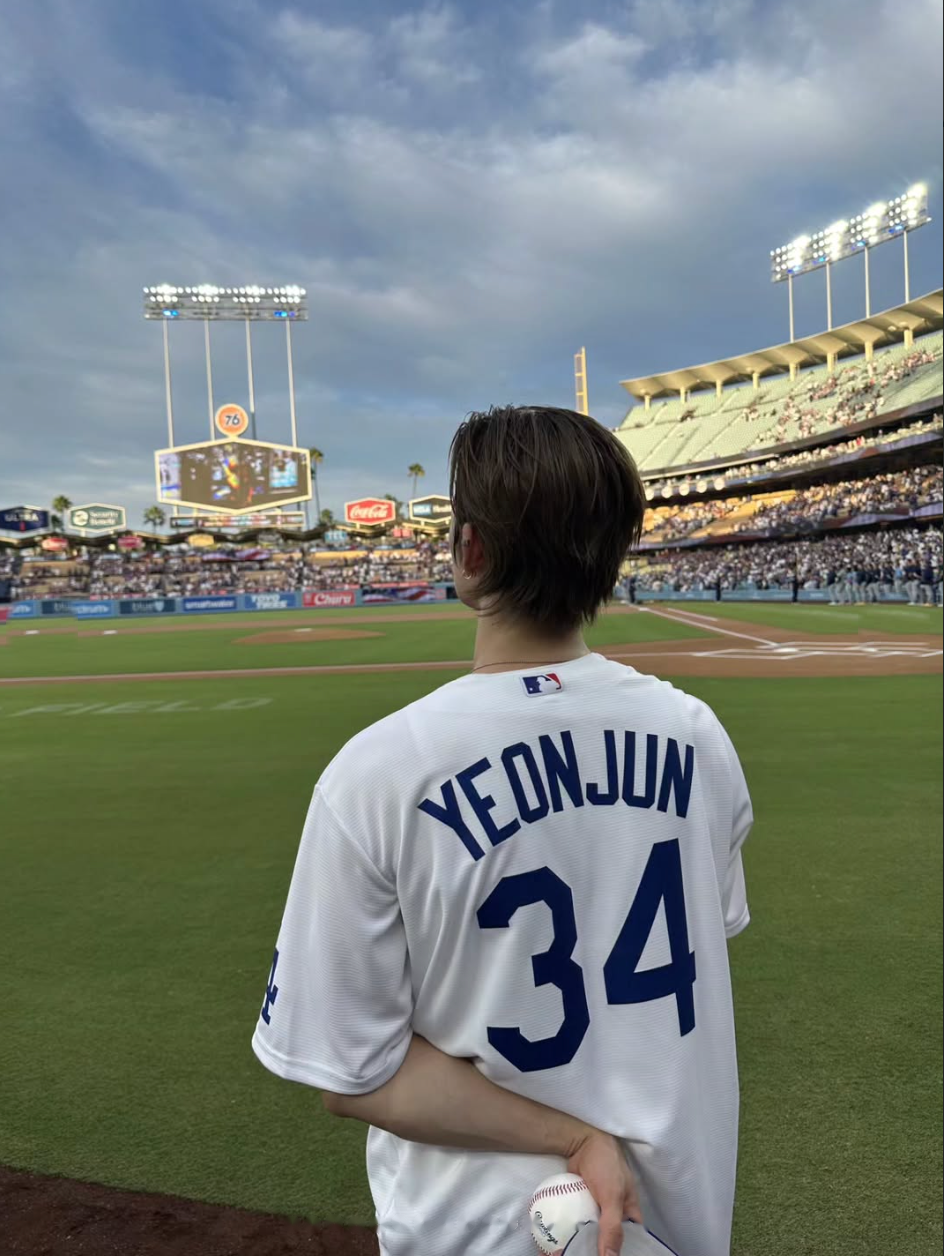
On my second night in LA, I attended my first Dodgers game. I was here to see YEONJUN’s performance at the team’s annual Korean Heritage night. That same night, CORTIS would also be performing in LA at Inglewood. My Dodgers ticket cost less than $70 and included a free jersey. The resale for Cortis was more than $400.
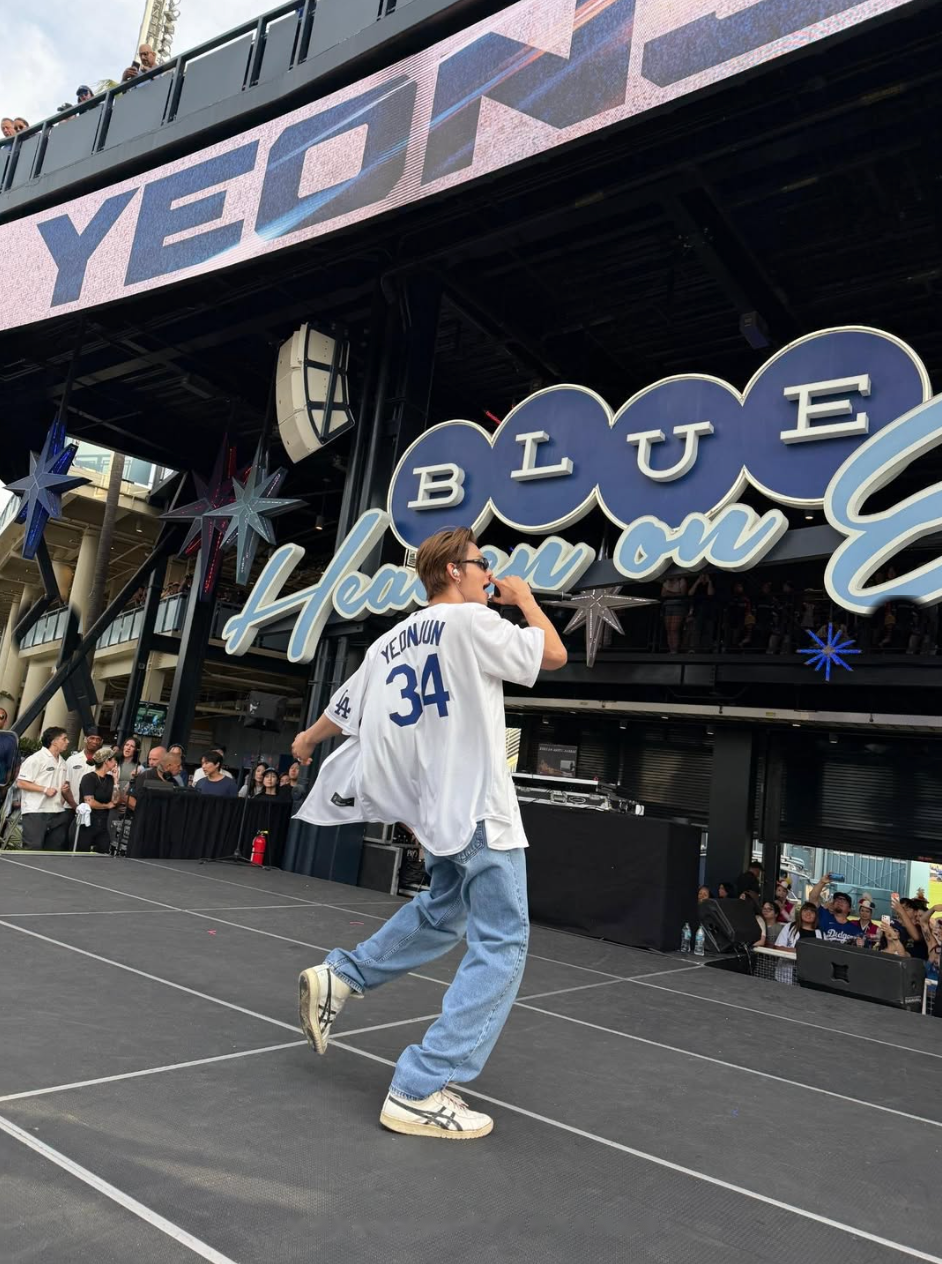
YEONJUN was performing at a pavilion near the entrance of the stadium. Twenty minutes before showtime, the crowd to the left side of the stage was still slim, so I slotted two rows behind the barricade and waited among MOAs with fluffy PPULBATO keyrings and YEONJUN photocards in colorful holders hooked to keyrings on their bags.
When he arrived, the fans lit up. Through the dozens of phones held up around me, I could see a makeup artist applying finishing touches to the idol. YEONJUN, who looked as good in person as he does in images: his skin was flawless. His hair was nicely trimmed. He was wearing sunglasses and a customized Dodgers jersey with his name on the back. His dancers were in their Ice Cream uniforms, a reference to this lead single.
Above us, a plane flew a sign paid for by a MOA across a crisp blue sky: “YEONJUN, OUR FXXKING STAR – SHINING BRIGHT”.
As he arrived on stage, though, a curious thing happened: The MOAs around me shut up and focused on their fancams. (I am still startled by the fact that I can actually hear YEONJUN and him alone in nearly all of my videos.) They were locked in.
This evening had a carnival feel. To my right and left were corndog stations and Korean specialty food menus. The stage, basically a small box that just moments earlier a group of Korean women had performed traditional dances on, was small. But YEONJUN still hit the stage with determination. He had an album to promote, and new fans to win over.
Some of my problems with PART 02 were solved on stage. YEONJUN could play the part of a rockstar on “FXXKING STAR” as he stood on a small pedestal. “Ice Cream”, which always sounded serviceable if not bland, worked in California. Maybe it was the air. Maybe it was the ease with which YEONJUN could sell the line, “Keep it cool, that’s rule number one.”
There was nothing to hide behind on a stage like this. YEONJUN relied on a teen interpreter to communicate with his sound crew and had no stage props to distract us with. All he could do was use his talent, which made the performance seem scrappier than any stage I’d see him on. Many people wrongly criticize K-pop idols for being puppets, but if that were true, why did I find YEONJUN’s performance at this tiny pavilion to be more interesting than some acts I’d later see at KCON’s main stage?
Later, YEONJUN was led onto the field for his first pitch. Jinro Toad, a famous soju mascot, waddled ahead, danced, and posed for photographs. When his pitch failed to make it far, he laughed and grabbed his Dodgers cap, looking down in embarrassment. Then, with his typical graciousness, he bowed and quickly exited the field.

YEONJUN performing at the Artist Stage
CJ ENM
The line to get into KCON Day 2 stretched in circles around the LA convention center. At its peak, attendees waited three hours to get in. Fans were mostly here for YEONJUN, who would perform at the Artist Stage in a nearly identical set to what I saw at the Dodgers game. “We’re already off to an amazing start,” he said near the opening to a crowd that was packed to the brim.
The main event, though, was YEONJUN’s solo stage at M Countdown later that night. It wasn’t Lollapalooza or Coachella (two festivals that YEONJUN probably should play at). Still, it was a chance to show a wider range of his performance skills on an arena stage. And I appreciated that he pulled a stunt: His opening number “Coma”, which also kicked off the event, gave him an explosive entrance as he was lifted on stage in a short black crop top, holding a sequined mask over his face.
“Coma” was an inspired choice to start the evening. It was the equivalent of YEONJUN firing off all the cylinders at once and using his most experimental song to show what he can do on a big stage. Unlike some of the cringer moments of NO LABELS, “Coma” taps into YEONJUN’s playfulness as a performer: “You’re in my zone!” he snaps in a refrain that gets bent and twisted as the song progresses. Unsurprisingly, though, none of the truly ascendent moments of NO LABELS made the setlist that night. Instead, YEONJUN stuck to a carefully curated setlist of “Talk to You”, “Ice Cream” and “FXXKING STAR”. I wondered if this was to his detriment, though. Wouldn’t it have been more of a starmaking moment to pull out a song like “Do It” or “Nothin’ Bout Me”? If anything, those songs seemed to represent YEONJUN more than the music that seemed crafted to appeal to a widespread audience.
The following night, YEONJUN was back onstage as a member of TOMORROW X TOGETHER. It felt strange to see him back with the four members performing beloved classics like “Anti-Romantic”. Strangely, the group only performed one song – “So What” – from their newest EP, and dipped into some lows from their discography, like “Good Boy Gone Bad” and “Back For More”. The group is reliably great. But in a weekend full of surprising and sometimes moving performances, their set often seemed perfunctory. A dream stage featured dozens of KCONers who had auditioned earlier in the day to perform “I’ll see you tomorrow”. But there were no surprise covers—no re-arrangements of their biggest hits. As the night ended and the group stood at the edge of the stage waving goodbye to fans, I felt that YEONJUN’s return to TXT seemed so normal, if not inevitable.
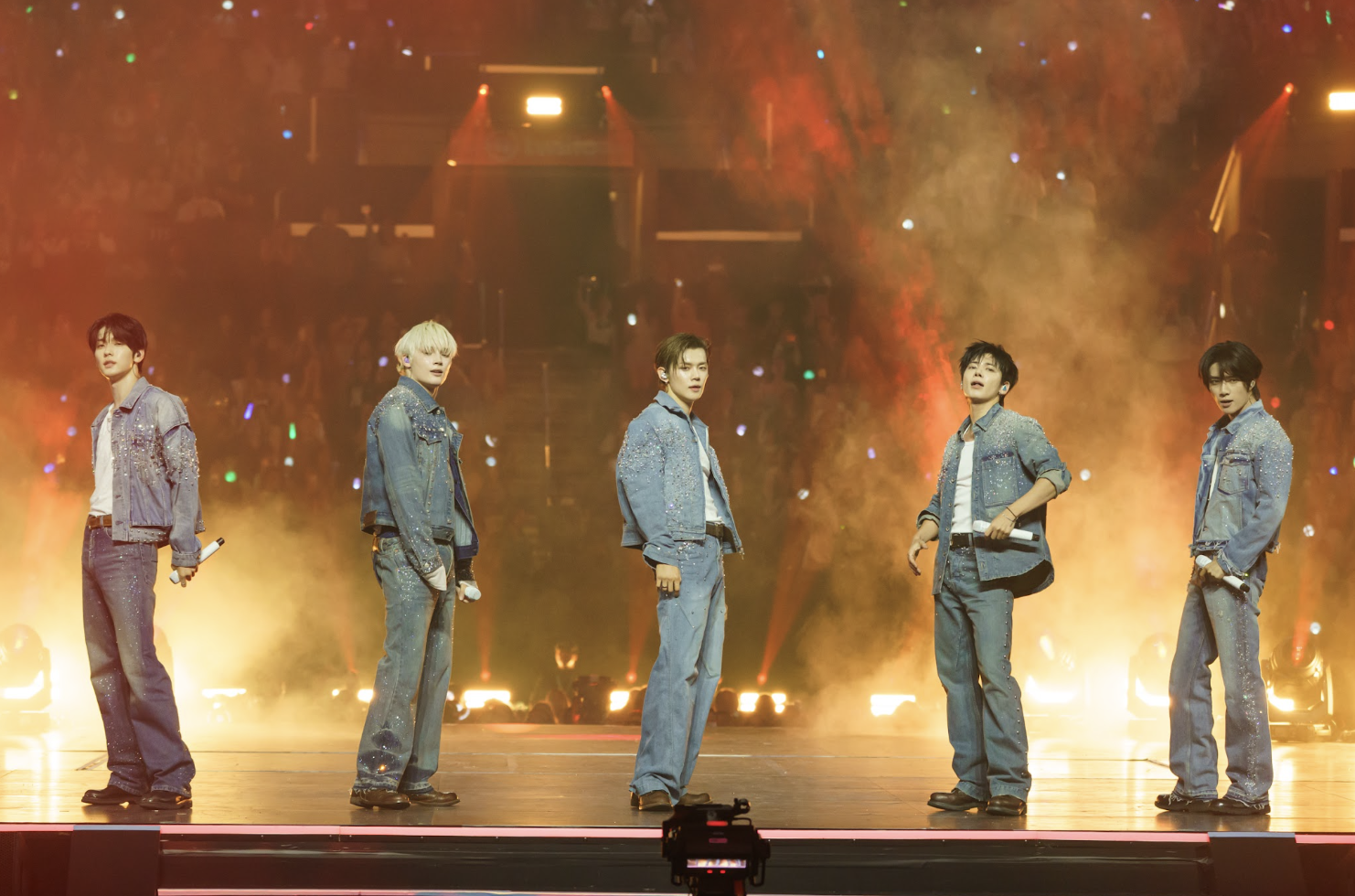
TXT performing on the M Countdown stage
CJ ENM
YEONJUN has only two writing credits on PART 02, but I’m partial to “Long Way Long Ride.” When YEONJUN talks about writing an unfiltered, honest album, this is the one song where I actually hear his voice. “You’ve been chasing highs in all different cities,” he tells himself and asks, “Wasn't that road rough on you?”
In the twenty years since RAIN left the U.S., many groups have gone farther than he did. The problem with being the first is that you will rarely get the accolades you deserve. You will rarely experience the fruits of your labor.
Like RAIN, YEONJUN has been clear that he wants to succeed. But I wonder how lonely this road has been for him. I wondered if he was tired of playing K-pop conventions, tired of doing fan service at fansigns, and how hard he was being on himself to succeed.
Earlier this spring, when TXT promoted their comeback for their seventh year, SOOBIN and YEONJUN admitted they hadn’t spoken to each other for nearly a year. At one point during a rehearsal last year, SOOBIN said YEONJUN got so upset that he left a practice room and didn’t come back to the dorms. “I knew he was having a hard time,” SOOBIN admitted. “But I didn’t think he would take it out on us.”
YEONJUN, for his part, admitted that he can avoid talking about his feelings. He would have let it go on for longer, he guessed, if SOOBIN hadn’t finally pried him into opening up. I thought about this as I watched YEONJUN’s press tour. How much weight is he carrying trying to succeed in a country, in a culture, that still doesn’t quite understand K-pop – or him? How does he feel at fansigns or at K-pop conventions when he clearly, really, wants to do something bigger, grander?
Sometimes, as we get older, we realize that our dreams don’t always shake up the way we think they will. There is a certain amount of trauma in becoming an idol, in trying to adapt to a culture that isn’t your own, in constantly scanning yourself to see if you measure up to what society wants of you.
YEONJUN seems to address these feelings on “Long Way Long Ride”: “You can let yourself out of your prison now,” he coaxes himself. “Go ahead and cry and hurt as much as you need right now.” Then, with some wisdom, he adds to a younger version of himself, “That’s how we face each other.”
