

On ‘TYPHOON,’ Luke Chiang Knows Good Things Take Time
The singer’s debut album comes nearly six years after a health issue nearly torpedoed his career. It’s worth the wait.
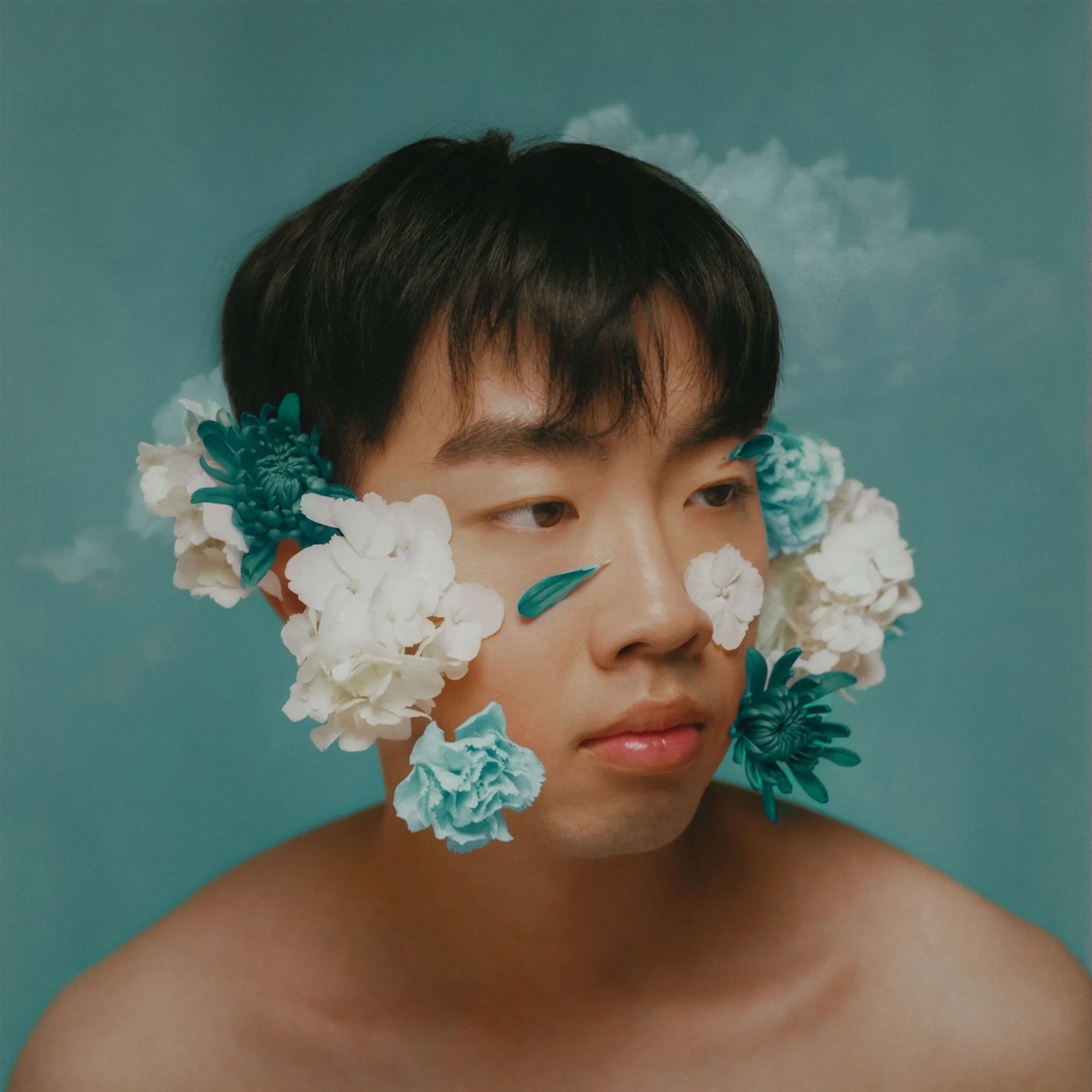
IN 2019, LUKE CHIANG INDEPENDENTLY released a string of singles that led to unprecedented viral success. Chiang, then based in Arizona, was still a teenager when the bluesy R&B tracks like “May I Ask” and “Shouldn’t Be” blew up. He had no label backing him; no team that helped push him on to the algorithms. So it’s an incredible feat that today, “Shouldn’t Be” has amassed nearly 300 million streams. It’s so unheard for an unknown to reach this level of success that only yung kai would come close to touching Chiang’s stardom five years later with his monster hit “blue”.
Chiang’s story could have easily turned into one of superstardom, or at least the pursuit of it. Instead, he disappeared. Not long after Chiang’s viral success, he lost his voice due to laryngopharyngeal reflux. It was a cruel twist of fate that right as Chiang’s career was beginning to take off, his health forced him to halt everything.
For the next few years, Chiang tried multiple treatments in an effort to gain his voice back. The concern, Chiang wrote in an Instagram post in 2020, was that people would stop caring about his music. “When there finally comes a day that I release something new, will my platform be dead?” he asked. “I don’t know. I really have no idea what I’m doing. I see other artists dropping music videos, getting publications, working on albums, and get this knot in my stomach because I feel like I’m missing something.”
The photo accompanying the caption featured handwritten lyrics, scratched through and rewritten. One of the song’s lyrics was titled “Never Tell”.
Then, in 2024, Chiang announced a return. Amazingly, the fans who had supported Chiang since the early days were still around. But there were also, arguably, more fans. His time away had created a mysterious aura of questions that surrounded Chiang: Would he ever return? Were the first few singles all we would ever get? And what about his talent? It seemed devastating that he might never realize his full potential.
Chiang didn’t give any interviews about his return to music and, even on social media, he said very little, which was in keeping with the lyrics of “Never Tell”: “Patience/ All of this will make sense,” he sings in the opening lines, as if it is a meditation. “I gotta say less/ I know that I’ll never tell.”
Throughout the next year, Chiang battled more LPR-related flareups but slowly dropped new music. He worked with new collaborators and friends, like Jesse Barrera and Patrick Hizon. The music was often brighter than fans might have expected a Luke Chiang song to sound, but it had been nearly six years since the release of his first music and a lot had changed since then. Chiang’s life had changed.
This week, Chiang released his debut album TYPHOON. The album, which Chiang produced with a close group of collaborators and friends, is already a smash hit. It debuted in Spotify Top 10 albums of the week at number six, and cements Chiang as a leading figure in independent music.
But away from the noise – and despite the title – TYPHOON is a largely quiet, introspective album that is bookended by two songs about longing for home. On the opening track “twenty something”, Chiang writes about moving away from his parents’ home in Arizona to LA. “When you’re gone I’ll make it through,” he admits, “Cause I’m still learning how to live away from you.” But Chiang also looks at his parents as they used to be: twentysomething young adults who did their best raising them. “My superheroes,” he muses. “I see the sacrifice, the toll, the price you paid/ I’ll try to do the same.”
Chiang also writes candidly about the tolls of depression and anxiety. On “heaven” he suggests that he’s only happy when he’s asleep. “How can I live like this?” he asks. While on “tailspin” he believes that he’s “playing too close to the fire” but “at least I feel something.”
A good amount of TYPHOON, too, considers what it means to find your other half and to spend time with someone who makes you feel seen. I love the lyrics of “good company”, where Chiang realizes that good relationships take time. “So if it takes time, then it takes time, that’s not a problem,” he assures a partner. Maybe the whole point, he realizes, is that there’s no point in trying to solve a problem with time. Things, life, works out as it’s supposed to.
The most sure-fire hit is “say that!”, a single with a bright, thumping production by Barrera and Ryan Grey-Bandong. This is the most accessible and immediate song on the album, and a pre-release that I kept coming back to
But I’m most drawn to the songs where Chiang considers what matters most to him. Time, as he writes about on “good company”, was all he had at different points of his stalled career, and I was fascinated to hear how he processed it. “Gotta give myself some grace, gotta live with myself,” he tells himself as he charts his own path on “deserve this”. “I’ma figure it out when it’s all said and done.”
Chiang is at his best when he draws on his life experiences to tell us more about himself. On “shoes”, he recalls a childhood where he “couldn’t read or write much, but I spoke a little Mandarin.” I love the images he draws of a young boy spending summers in Taiwan with his family and of the woman his mother was before she had her son. “Tell me,” he asks her, “what could I do in the shoes you walked in?”
“Arizona”, the final track of the album, completes the bookends that “twentysomething” began. “Friends all look the same, family’s waiting for a photo,” he recalls, “here’s where I feel safe”. But “Arizona” is about goodbyes. Chiang has to move in order to grow. “Don’t you go changing while I’m away,” he requests but he knows that, likely, things won't look the same when he returns.
Yet as I think about TYPHOON, I return to the message of “good company”. Building a life that you’re proud of and finding someone to share it with takes hard work. Good things take time, too. This is something Chiang knows well. Six years after his world nearly shattered during Taiwan’s typhoon season, Chiang’s moment has come.
