

Sylo Is Trying To Get As Intimate As Possible
As he embarks on a North American tour, the singer-songwriter reflects on why he’s struggled to find a place in music. But he says, “No matter what mold I fit myself into, it always ends up on the other side sounding like me, like Sylo.”
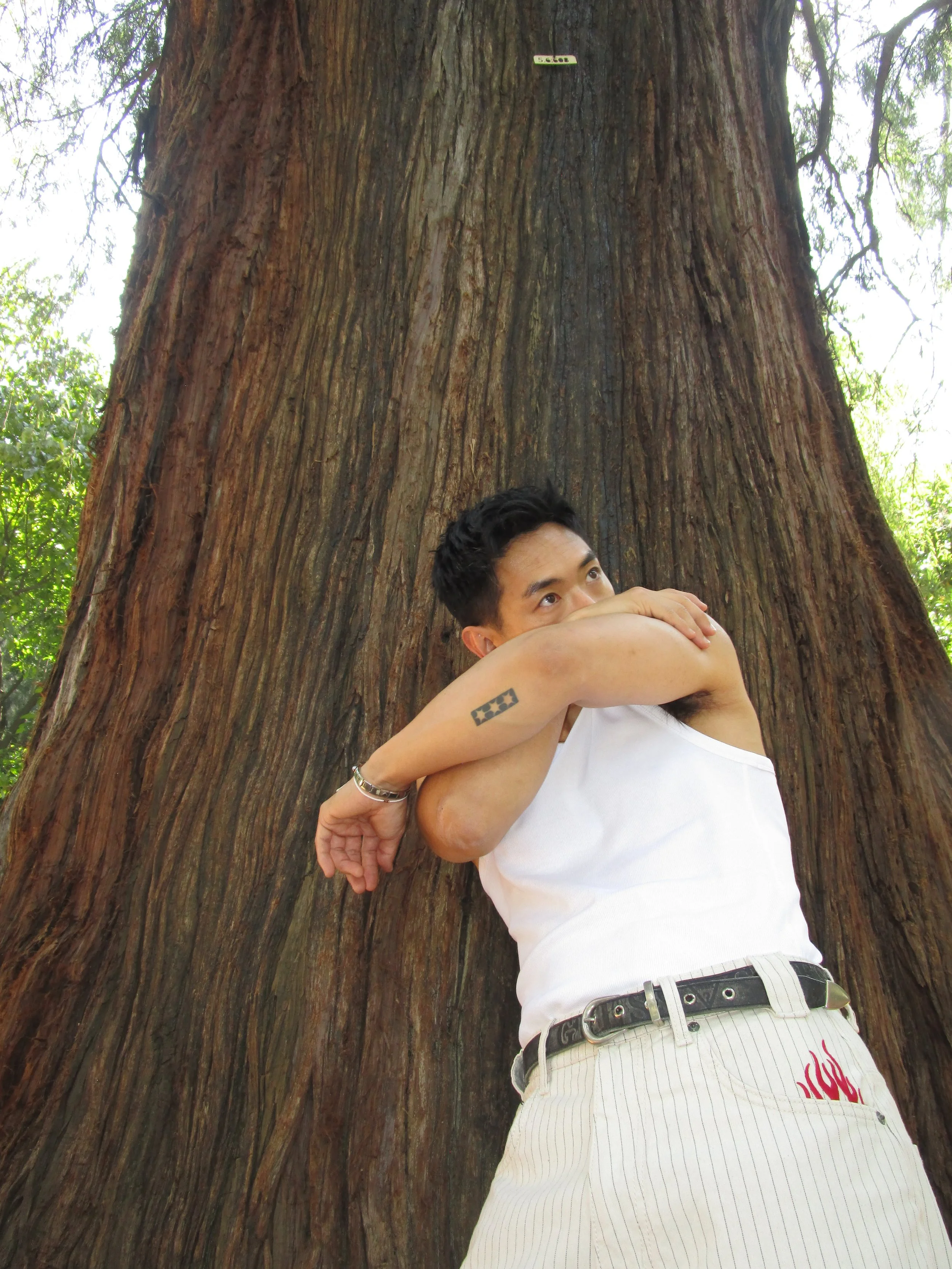
HALFWAY ALONG SYLO’S TWELVE-THOUSAND-KILOMETER journey from Toronto to Mexico City, his car broke down in Memphis, Tennessee, while stopped at a red light. “I was like, holy shit, what is happening?” he told me months later, in an interview from his apartment.
He and his friend took the car to a nearby AutoZone, where a mechanic ran a free diagnostic. Luckily, the issue was an easy fix. Though they had to stay in the city overnight, what Sylo remembered most clearly was the hospitality. “Everyone went out of their way to make sure we were okay.”
This culture, he remembered, is very different from where he comes from in Toronto, Canada. Reflecting on his experiences, Sylo said sheepishly, “I’m a little jaded from Toronto culture, which is why I think I had to get out of there.”
The next day, Sylo and his friend drove on. As they continued their trip, Sylo noticed that “the further South we went, the warmer it got.” In New Orleans, for example, he’d catch the eye of strangers, and they’d smile at him. Once he reached Mexico City, Sylo was struck by how open everyone was to outsiders. What he had longed for, that human connection, was here. ”People will walk by when you’re eating a meal and say bon appetit basically,” he said, adding somewhat incredulously, “complete strangers wishing you that.”
This need for connection appears in Sylo’s art, too. He creates sultry, slow-burning music that lingers. Since 2020, Sylo has released two albums and several singles, each pursuing greater intimacy and understanding. “When it comes to my music,” he told me, “I just want to get as intimate as I can. That certain thing, I just can’t really touch with an explanation. That ineffable thing is so appealing to me.”
Like any artist, Sylo has tried to follow his heart. The idea to move to Mexico came from a friend who’d spent months traveling through Europe, Central, and South America. Yet even before his friend suggested the idea, Sylo had been trying to get out of Toronto.
Years before, the plan was to move to Los Angeles. He retained an immigration lawyer and began preparing the paperwork to move. But then the pandemic happened. Toronto went into lockdown and, coincidentally, Sylo fell in love. They built a life together, got an apartment, then a cat. Four years went by. But by the end of 2024, the relationship was also over.
Sylo wanted out again.
The new plan, he told me, was to move to New York. His manager and team lived in the city, and he would have more opportunities to network within the music industry there. It felt right.
“That was the original plan,” he remembered. “I was just gonna go to Mexico City for a few months, rent an Airbnb, and figure out how to get to New York.”
He paused. “But once I got to Mexico City,” he said, “it was game over.”
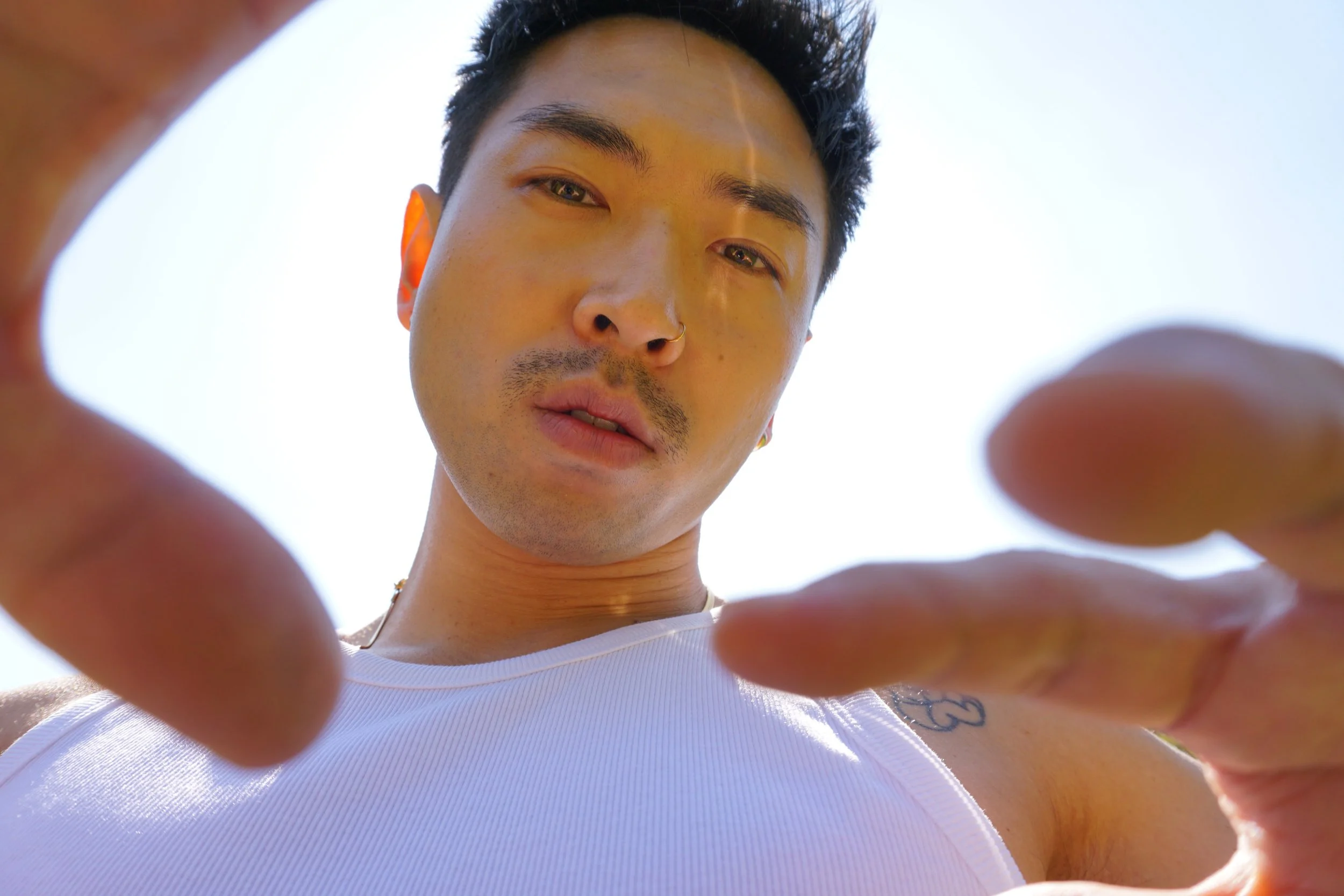
SYLO HAS SPENT the majority of his life in Toronto. However, before returning to focus on his music there, Sylo spent a brief period living abroad. Just a few years out of high school, Sylo moved to Korea. “I wasn’t really doing much. I hadn’t decided to take music seriously yet, even though I knew deep down it’s what I really wanted to do,” he said.
So, his parents bought him a one-way ticket to Korea. “They were like, ‘Go see your family, connect to your heritage, go learn more Korean,” he said. He wound up staying for five months and rented his own place.
It was an interesting time for Korean culture, Sylo recalled. K-pop was starting to land Stateside thanks to Psy’s mammoth single “GANGNAM STYLE,” while idol groups like Girls Generation were beginning to make headway with international audiences. Sylo didn’t know much about K-pop, so this music was strange, kind of silly, but also fascinating to consume. “I grew up with OG 90s K-pop,” he said. But what was blowing up in Korea felt foreign to Sylo, as if he was experiencing it for the first time.
When he returned to the States, “GANGNAM STYLE” was everywhere. “It was like I had left Korea, but Korea hadn’t left my world.”
Though his time in Korea would begin to shape his understanding of identity and the life he wanted – one of adventure, one where he was discovering more about himself, culture, or even art – Sylo didn’t begin recording music for another few years. Still, the impact of that experience lingered, making him aware that he was called to make music.
Sylo has a distinct memory at thirteen years old of having to make a decision. Would he choose to live a conventional life and become a personal trainer? He was interested in fitness and working out. Or, perhaps, would he go for something that felt more unpredictable? Would he become an artist?
Sylo didn’t fully commit to the career until he was in his mid-twenties. At that point, Sylo had played several house shows and messed around in bands. But finally, around 24, he decided to lock in and begin taking music seriously. “I think I was just floating until then. I knew I was behind,” he said. “I felt that I had a lot to learn. I don’t know anything about recording or even playing instruments.”
Sylo slowly saved up $5,000 working as a bartender, then spent it all on music equipment and gear. The main thought driving him was a simple one: Don’t waste time. Get into this quickly.
“From then until about 27, I had no social life,” Sylo said. “I went hard into grind mode.”

THE PUSH TO PROVE HIMSELF did finally catch up with Sylo. Over several years, Sylo released his first album, Sylo Songs, and a handful of singles that began to perform well. But the pressure to perform well started to weigh on him.
Like many men, Sylo felt pressure to make enough money to reap the rewards when he’s older; to provide for a family or have kids. But how can you do that as a struggling working musician?
Sylo doesn’t want to be boxed in by convention, though, and this feeling to be a free spirit, to do things his way, has sometimes created tension in his career. “The two most important things for me are my art and my inner journey,” he said. But this could sometimes lead to self-sabotage.
“I’ve definitely had moments in the past where I felt like I shot myself because I didn’t care about having the most successful career,” he explained. “Did I make the best choices? Could I have done more? Yeah, sure. But you can always be in a better place. It almost,” his voice drifted off for a moment as he let the thought hang in the air. “It would hurt to go against that nature.”
During these periods, Sylo spent much time reflecting on his artistic ethos and morals. “Do I want to achieve capital success and all the shiny, sparkly things I can get as a musician? Do I want to build on that intimate relationship I have with my art and challenge myself when things feel stagnant or boring?”
He knows that he could have gone the mainstream route, and at times, he did try to fit himself into easily constructed boxes. “It’s already a very particular framework I’m working through being an Asian American artist, let alone being someone who is just making whatever they want,” he said. He’s tried to make the K-R&B songs, songs that could sound like any given mainstream Asian American artist.
But his penchant for experimentation – and going against what others want him to be – is what makes his music fascinating. I am particularly fond of Dreamt that I Was, his second album, which blends together folk, R&B, and free jazz. There is no soundscape he’s unwilling to try; no idea about himself that he’s uninterested in exploring.
“This ain’t the first time I been through hell,” he declares on “Alaska” about a doomed relationship that he wants to escape, then adds apologetically, “I drag you to the bottom.”
Throughout his records, Sylo is never afraid to point the gun at himself; to talk about when he’s the problem, and sometimes, even revel in it. “Damn if I don’t miss it,” he sings of a bad relationship on “Miss It”, then asks sharply, “Does that make me a villain?"
Of course, Sylo’s music works so well because he’s unafraid of being the villain; of being the one in the wrong.
Cracks began to show on the opening of Blanket, his second EP. “I just want some millions/ Fall asleep to high gold ceilings,” he admits on the opening track.
When he released Blanket, Sylo was at his lowest point. “I felt so numb. I felt so low with my self-worth and my insecurity. I was really, really in my head,” he told me. At the time, Sylo was meditating eight hours a day and attempting to process traumatic, repressed memories. But that – coupled with the pressure to release great, popular music – was climaxing into a breakdown.
Things started to turn around after a ten-day silent meditation retreat. “I came back, and I felt like I could cry again. I could laugh again. I was feeling life so intimately again that I forgot that it was always there,” he said. “It was so new that the last time I felt it was probably when I was a child. You just do it. It was that same understanding that there is nothing to achieve, expect, or gain because everything I need is already here.”
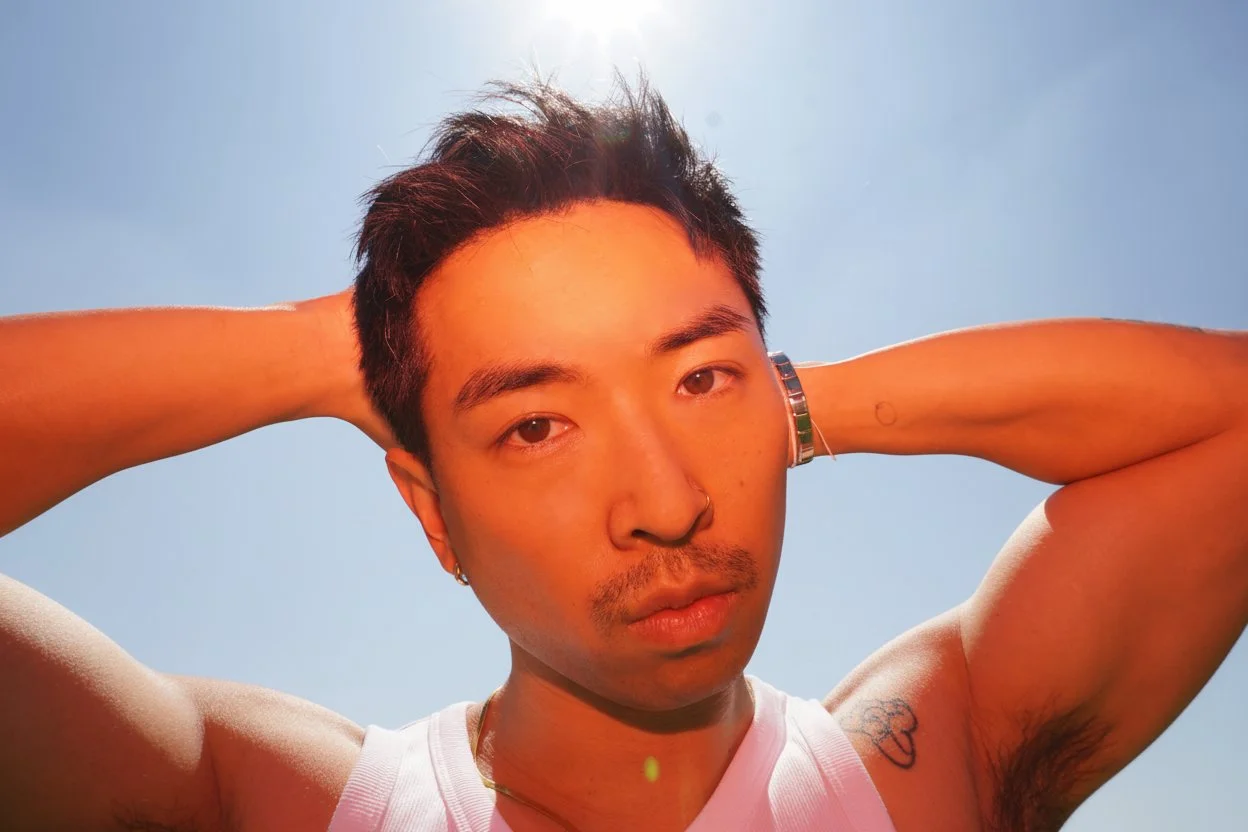
THESE DAYS, Sylo loves to dance.
In Mexico City, where he sometimes dances all night at clubs, he’s found that he’s not the introvert he thought he was in Canada. Reflecting on this change, Sylo notes that in Canada he always felt caught in a culture obsessed with hookups. “I don’t really like that. But here?” he said. “I love going out. It’s so fun. People love live music.”
From his apartment in Mexico, Sylo is developing the setlist for his upcoming tour. This is his second time on the road, and the tour will cover two legs, bringing him to LA, New York, and Texas, among other cities. “Put me on the road,” he said. “It honestly does not matter to me at this point because I’ve only done two proper tours and this is only my second headline tour.”
Sylo is making a point of connecting with audiences more and sharing more vulnerable stories. Perhaps, he speculated, fans might see some of themselves in his story. For now, he is okay with uncertainty. “I love the great unknown,” he said. “That’s probably why I drove from Toronto to Mexico City with no plan. It’s that sense of adventure when your heart just opens to something and tells you, YES. You know, then, that you’re on to something.”
He’s even made peace with the conflicting parts of him that felt twisted into different identities. For every song he made that was supposed to sound like someone else, Sylo found his way back to himself. “That’s something that I’ve really grown to appreciate and value,” he said. “No matter what mold I fit myself into, it always ends up on the other side sounding like me, like Sylo.”
For now, Sylo is content not to know what’s to come. He feels peaceful, even. “I like a cycle, and I just wanna live that artist cycle of making a project, going out to tour it, going home and starting all over again,” he said, with some circumspection. “I’ve never really done that before, so I wanna give it all I got and be there in real time connecting with people.”
