

The Unknowable LEE HEESEUNG Reinvents as EVAN
The pop star exited Enhypen in March for a solo career. Now, he re-introduces himself under a new name and a startling backstory.
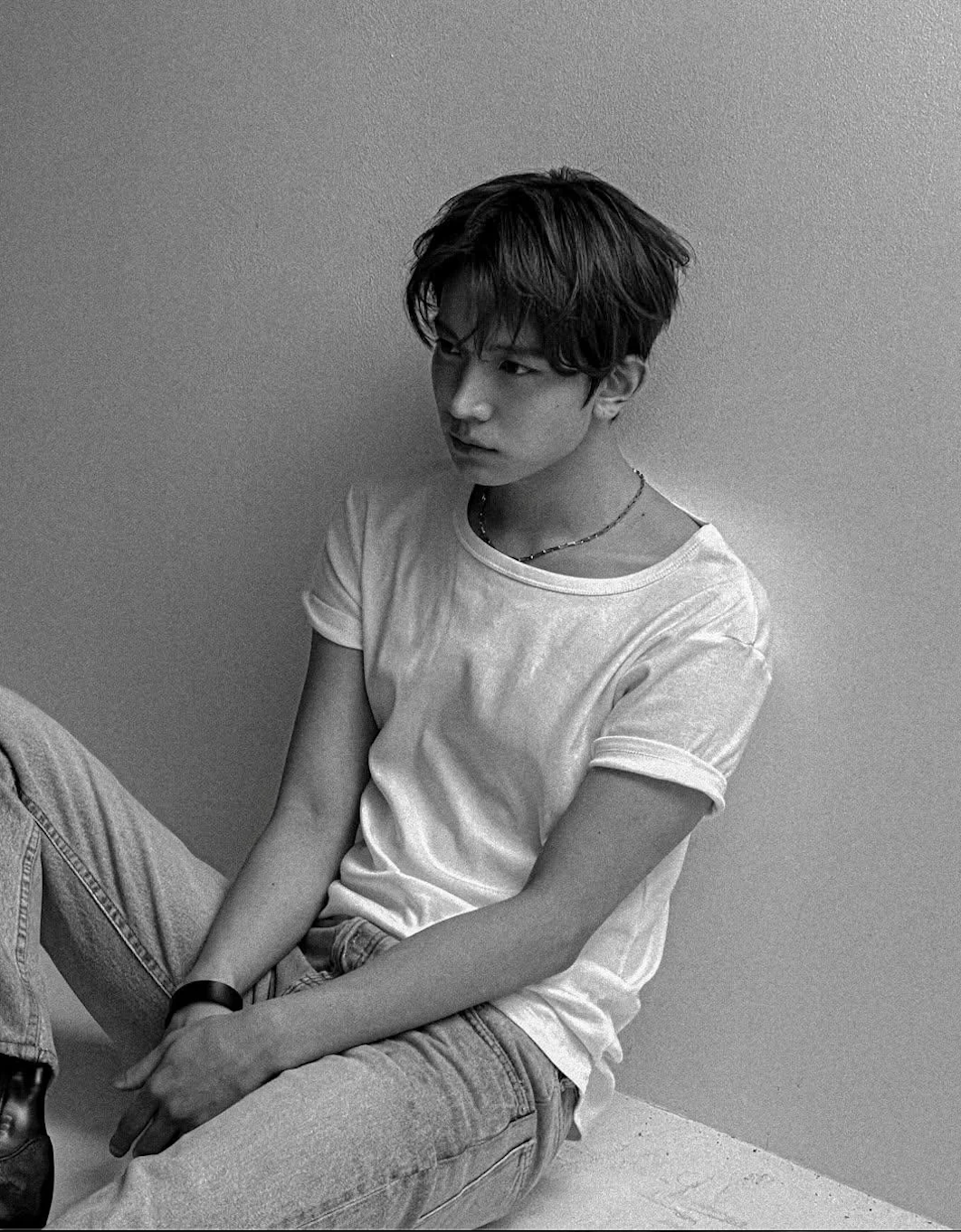
Watching LEE HEESEUNG, who performs under the stage name EVAN, promote his new album DEATH OF ME requires a heavy suspension of disbelief that this is simply an ordinary solo debut.
As the story goes, on a random Tuesday in March, BELIFT LAB announced that HEESEUNG would depart Enhypen, one of the most popular groups in K-pop. BELIFT LAB said HEESEUNG wanted to fulfill a dream of becoming a soloist, and that they would support him. Fans were not as understanding, and that’s how the trouble began. Protests erupted outside Hybe’s building. Fans chanted all seven names at concerts. Petitions demanding HEESEUNG be reinstated to the group grew by the thousands.
Four months after HEESEUNG left Enhypen, their leader, JUNGWON, had enough of the insanity and decided to address the issue head-on in a Weverse livestream. “Enhypen has six members, everyone. Enhypen is six now,” he said, looking nervous but visibly frustrated. The fanchants needed to stop. Engenes, their fanbase, needed to move on. “Let me be absolutely clear,” he said. “It’s disruptive.” A few days later at a concert, Jay reinforced the message: “Enhypen,” he said firmly, “is six now.”
Meanwhile, EVAN stayed quiet. When asked recently in an interview with Teen Vogue why he first decided to leave the group, he demurred. “That’s not my story to tell,” he replied. “It could impact many members of the company and many people I love. I don’t think I can.”
At a press conference for his new album DEATH OF ME, he again dodged questions about his decision to go solo. When asked about Enhypen’s achievement on Billboard, he offered, “I’m extremely proud of them. Reaching No. 1 on the Billboard 200 isn’t an easy goal to achieve, is it?” It was the first, and only time, he has mentioned their name since departing.
His silence was nothing new, but the acceptance that he would be asked and that he should say something reflects a changing strategy inside the K-pop machine: if you’re going to blow up one of the most popular groups in the industry, you can’t act like the past six years never happened.
A story (or scandal) needs a motive to make sense, so in an interview with Weverse Magazine, a publication that Hybe owns, EVAN offered a bombshell. In fourth grade, he revealed, he was diagnosed with malignant lymphoma – cancer. Treatment was tough, he said, but the worst part was fearing death at such a young age. “I’d watch my friends pass away and kept thinking, 'I want to live so badly, I want to go home,’” he said.
He explained that the title DEATH OF ME wasn’t just metaphorical. “It comes from a place of having actually gone right up to the edge of death myself,” he said. The main reason that he wanted to go solo was because time is of the essence, and he had already lost so much of it.

Some of the most fascinating scenes in K-pop documentaries released this year have taken place in tense creative strategy sessions between company executives and artists. In BTS: THE RETURN, which documented the making of ARIRANG, executives from Big Hit and BTS’ members debated how much of the album’s lyrics should be in Korean. Nicole Kim, Vice President of Big Hit, pushed for English so the music could be “heard and shared with as many people around the world as possible.” Namjoon, the leader, disagreed and called representing Korea “a heavy crown” to wear. Kim’s suggestion won out, and months later, when the album was released, this same debate held in a Big Hit boardroom played out among fans and critics,
A similar tension runs through EVAN’s Debut Documentary. “The goal we have to reach,” BE LIFT CEO Kim Tae-ho said as a challenge, “is convincing people why LEE HESEUNG went solo.” He offered a version of the answer EVAN would eventually share: that he wanted to tell his own story and let go of a dark shadow. “People have to go, ‘Ah!’ They have to be convinced,” he said with the conviction of a professor persuasively arguing a theory to his class. EVAN nodded intently.
As they debated which song would be the lead single, EVAN was outvoted on his choice: “Immature.” “At the end of the day, we make popular music,” a staff member told him. “And by that standard, ‘Immature’ is too high of a bar to clear.”
They chose to go with “RIDE OR DIE”, a track that is as bland and nameless as its title. EVAN’s voice is heavily distorted with autotune, and the lyrics are as generic as a seasonal drink at Starbucks. Perhaps the worst criticism, though, is that it sounded like an Enhypen B-side, which didn’t explain why he needed creative control. It’s not an awful single, yet it does point towards an artist who is somewhat of a blank canvas, and I could see why he wanted a single with a point of view.
As an artist, then, his instincts were correct to push for “Immature.” In an interview with Billboard, he explained that he wrote “Immature” to hit back at everyone who calls him selfish. “Why are you so immature?” they’d ask him. “I decided to own it.” Maybe he is. He didn’t care.
EVAN’s performance is bratty and bullish. The track doesn’t sound pretty, but rather punk. It also feels most authentic in the moments when EVAN’s idol persona breaks, and he sounds refreshingly like a feisty 24-year-old boy. Take, for example, a segment he filmed with Drew of Hybe’s Latin group Santos Bravos where they try different candies. When Drew explains what gummies are, Evan laughs almost sardonically. “Bro,” he replies sharply. “I know what gummies are.”
At times, the album sounds as if EVAN is trying on different genres and performances to discover who he is. It’s hard to separate the influence of THE WEEKND’s music on the title track and “Twilight”. But from the second half onward, EVAN plays things a little less safe. “Overflow”, a B-side released with “RIDE OR DIE”, is ethereal with a minimalist production that centers his vocals and is one of my favorites.
“Going Home”, the closer, has some of the sharpest writing on the album as he alludes to his choice to go solo and the criticism he received for it. “All those cold stares and hateful words,” he sings, “I spend my nights hoping they’ll pass by someday.”
In the days after EVAN announced he would leave Enhypen, fans dug up performances where he looked checked out. In one video, he looked as if he was dozing off.
In performances for “DEATH OF ME”, though, the opposite is true: He looks so committed to his character that he makes the choreography look easy. He also leans into the weirder parts, moving his head like it's on a swivel as if he’s possessed, dropping his wrists like claws. You can see shades of Michael Jackson’s skill here or traces of early Lady Gaga when she was proudly freaked out.
It’s hard to watch these performances and not see that, whether or not we ever get clarity, EVAN has a fire in him that wasn’t present six months ago. In interviews, the singer seems at peace with the fact that some people will never understand or support him. “People are contradictory by nature,” he said in the Weverse interview. “That’s what makes this album feel really human to me, and I think that’s exactly why it’s got a bit more of a dopamine rush to it.”
It’s an almost uncanny admission that, as a pop star, HEESEUNG had to self-annihilate his past in order to reinvent himself.
